
Residential specialty service
Tub Cut-Down & Step-In Conversions
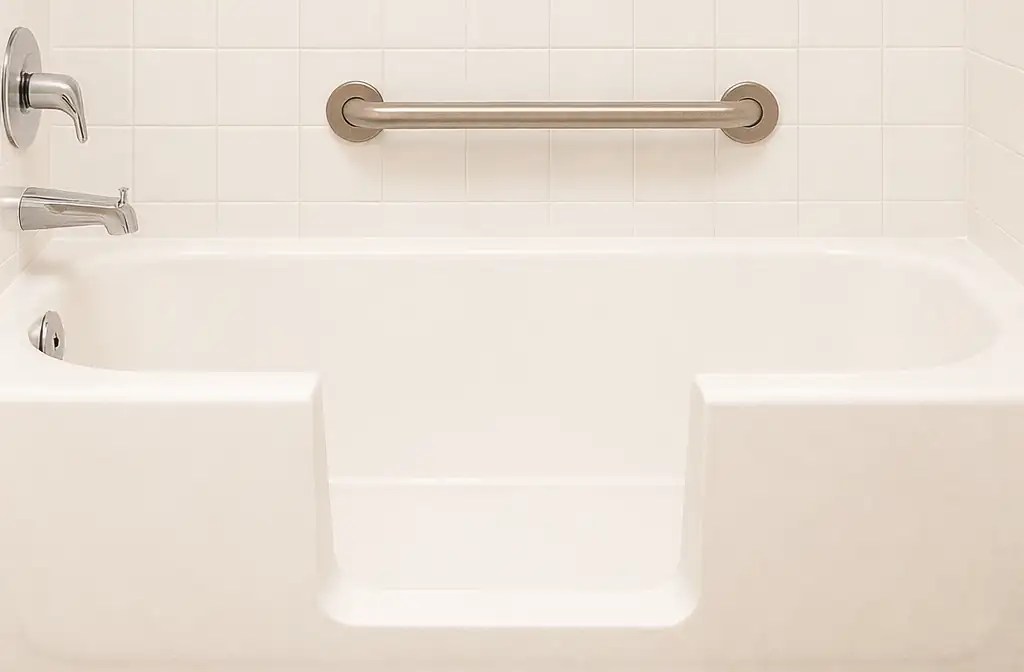
Stepping over a high tub wall can become difficult. A cut-down conversion removes a section of the side wall of a suitable existing tub to create a lower step-in opening, then finishes the opening to match, without replacing the tub.
Please read: what a cut-down is and is not
A cut-down lowers the height you step over. It is not a guarantee against slips or falls, it is not represented as meeting ADA or other accessibility standards, and it does not replace an assessment by an occupational therapist or accessibility professional. If you are planning changes for someone with mobility needs, we encourage you to get that advice first.
How it works
What is a tub cut-down conversion?
A section of the tub’s side wall is removed to create a lower step-in opening. The opening is then finished with an insert and the surface is colour-matched and refinished so it looks consistent with the rest of the tub.
Because the existing tub stays in place, a cut-down can avoid the demolition and plumbing work of replacing a tub. Older cast-iron and steel tubs are often well built, and converting one keeps it in use.
Step 1: Evaluation
We assess the tub’s material, condition and installation, and decide whether and where an opening can be placed.
Step 2: Cutting the opening
A section of the side wall is carefully cut out to lower the step.
Step 3: Finishing the opening
An insert finishes the cut edge to create a smooth entry.
Step 4: Colour-matching and refinishing
The surface is refinished so the opening blends with the rest of the tub.
Step 5: Cure and handover
We explain the cure period and how to care for the finish.
Suitability
Is your tub a candidate?
Not every tub can be modified. These are the things we look at.
Tub material
We work with cast-iron, steel, fiberglass and acrylic tubs. Suitability is confirmed on evaluation.
Condition and installation
The tub needs to be sound and properly supported. Cracks, soft spots or water damage must be dealt with first.
The person using it
How the bathroom will be used matters. A professional accessibility assessment helps decide whether a cut-down, a different solution or a combination is right.
Accessibility considerations
Planning an easier-entry bathroom
A cut-down is one option among several. Depending on the person’s needs, other changes may be worth discussing with a qualified professional:
- Grab bars installed by a qualified installer
- A bath or shower seat and a hand-held shower
- A slip-resistant tub bottom added to the standing area
- Better lighting and clear floor space
Learn more in our guide to accessibility and easy-access tubs. Managing a senior living community? See senior living tub cut-downs.
Caring for the finish
- Wait until we confirm the finish has cured before use.
- Clean with mild, non-abrasive cleaners and a soft cloth.
- Avoid scouring powders, steel wool and abrasive pads.
- Avoid striking the edge of the opening with hard objects.
- Let us know promptly about chips or wear at the opening.
Homeowner questions
Tub cut-down FAQ
Can any bathtub be cut down?
No. Many cast-iron, steel, fiberglass and acrylic tubs can be modified, but suitability depends on the tub’s construction, condition and installation. We confirm whether your tub is a candidate after evaluating it.
How much lower is the step?
The new entry height depends on the tub and where the opening can be placed. We discuss what is achievable for your tub during the evaluation.
Will I still be able to take a bath?
Ask us about this for your specific tub. A cut-down creates a low opening in the side wall, so how the tub is used afterward depends on the option chosen. We explain the choices before any work starts.
Can the tub be returned to its original configuration later?
Ask about this during your evaluation. Whether and how an opening can be closed again depends on the tub and the method used.
Is a cut-down an ADA-compliant accessibility solution?
We do not represent cut-down conversions as meeting ADA or any other accessibility standard, and a cut-down does not replace a professional accessibility assessment. An occupational therapist or accessibility specialist can help decide what is right for the person using the bathroom.
Will it prevent falls?
No modification can guarantee that. A lower step-in opening is intended to make getting in and out easier. Grab bars, seating, lighting and other changes may also be advisable; talk with a qualified professional about the user’s needs.
How long does a conversion take and what does it cost?
Both depend on the tub, the work involved and curing requirements. We confirm the timeline and price with your estimate after seeing the tub.
We are based in Sugar Hill and provide tub cut-down conversions for homeowners across Metro Atlanta and surrounding communities, with residential service extending to Athens, Dawsonville, Peachtree City and Macon. Availability varies, so call to confirm your address or browse our residential service areas.
Related residential services
Other ways we restore bathroom fixtures
- Bathtub repairs & refinishingChips, surface cracks, rust and worn coatings repaired, with or without a full refinish.
- Fiberglass tub repairCracks, holes, soft spots and worn finishes in fiberglass tubs, evaluated first.
- Tile refinishing (tile tune-up)A new finish for sound but dated, stained or worn ceramic tile.
- Antique tubs & sinksClawfoot, cast-iron and vintage porcelain fixtures, evaluated one by one.
- Slip-resistant tub bottomsA textured finish added to the standing area of a suitable tub.
Ask Whether Your Tub Can Be Cut Down
Tell us about the tub (material, if you know it, and how it is installed) and who will be using it. A photo of the tub helps.
Tell us about your project and we’ll review your request. Photos of the bathtub, shower, tile or sink can help us evaluate the work.
Prefer to talk? Call us directly:
Call 770-945-0072