
Residential Refinishing | What to Expect
Our Bathtub Refinishing Process: What Homeowners Can Expect
Thinking about refinishing a worn, stained or dated bathtub? Here is how the process generally works, from the first evaluation to caring for the finished surface.
Unique Refinishers is a family-owned company based in Sugar Hill, Georgia, refinishing bathroom surfaces for more than 55 years.
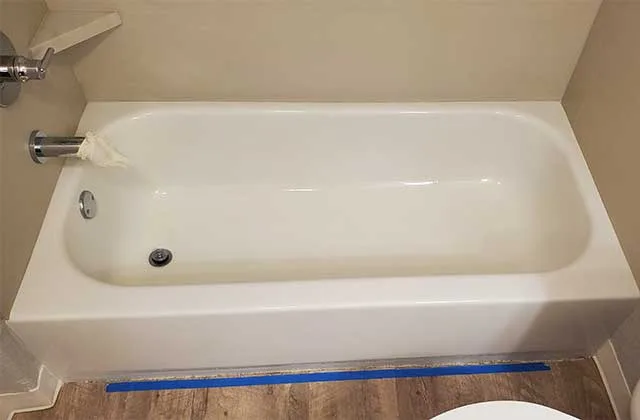
Process overview
The refinishing process at a glance
Unique Refinishers describes its professional reglazing process as beginning with deep cleaning and progressing through damage repairs, masking and ventilation, bonding-agent application, premium refinishing-product application, curing and inspection. Every fixture is different, so the details are confirmed for your tub.
- 1
Surface evaluation
The fixture is reviewed to confirm it is a good candidate for refinishing.
- 2
Work-area preparation
The bathroom is protected and ventilated before surface work begins.
- 3
Deep cleaning
Residue and buildup are removed so the new finish can bond.
- 4
Eligible repairs
Suitable chips and surface damage are repaired first.
- 5
Bonding agent and finish
A bonding agent and refinishing product are applied.
- 6
Drying, curing and inspection
The fixture cures before use and the work is inspected.
Step 1
Surface evaluation: refinish or replace?
Before any work is scheduled, the fixture is evaluated. The goal is to confirm that refinishing is the right choice for the tub, not to refinish every surface regardless of condition. Photos sent with your estimate request help describe the job, although an in-person look may still be needed.
Refinishing is often a good fit when
- The tub is solid, properly supported and does not flex when you stand in it
- The main concerns are stains, dullness, wear, small chips or a dated color
- You like the current layout and want to avoid tearing out tile, walls or flooring
- There are no active leaks or water damage around the fixture
Repair or replacement may be needed when
- Cracks that move, or a tub that shifts underfoot
- Rust-through, active leaks, soft flooring or water damage
- A layout or accessibility change that needs a different fixture
- Surfaces or earlier coatings that are not compatible with the refinishing system
A new finish does not fix leaks, structural movement or water damage, and it should never be used to hide them. For cost factors and how refinishing compares with replacement, see our bathtub refinishing cost, durability and process guide.
Step 2
Preparing the work area
Surrounding surfaces are masked and protected, and the room is ventilated before refinishing begins. Expect temporary odor and restricted access to the immediate work area during the appointment.
To prepare:
- Remove toiletries, bath mats, towels and personal items from the bathroom before the technician arrives
- Keep children, pets and people with respiratory sensitivities away from the work area during application and as directed afterward
- Follow the ventilation instructions you are given
- Ask whether the bathroom sink and toilet can be used during the appointment, as this can vary by job setup
- Mention ventilation limitations, nearby bedrooms, shared walls or other site-specific concerns before service begins
- Do not use the bathtub until the stated cure period has passed
If you have asthma, chemical sensitivities, pregnancy concerns or other health questions, discuss the planned work conditions with us and consult a qualified healthcare professional for personal medical guidance.
Step 3
Deep cleaning and surface preparation
Soap scum, body oils, mineral deposits and cleaning-product residue can all interfere with adhesion. The fixture is deep cleaned and the surface prepared so the bonding agent and finish have a sound base.
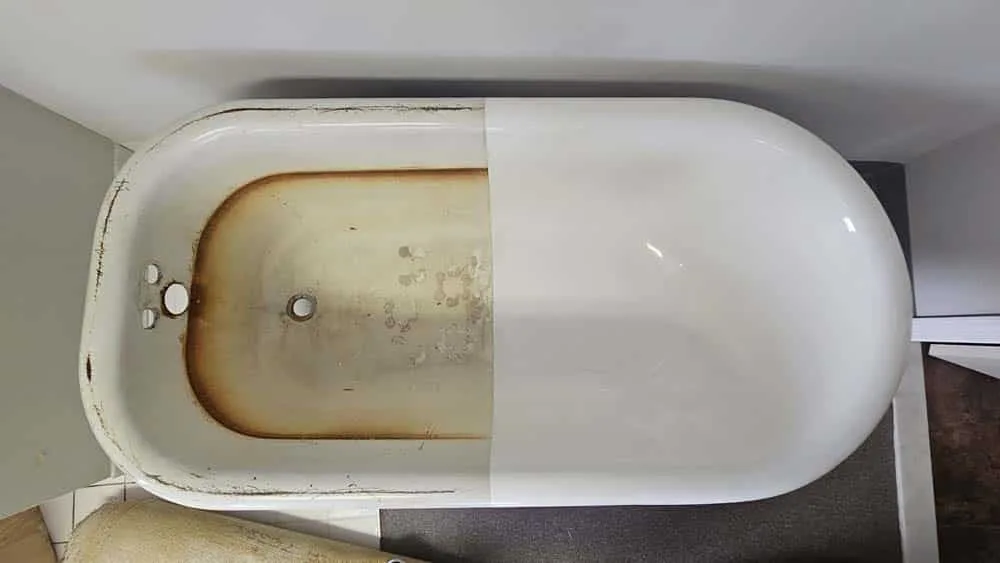
When a tub has an earlier refinish that is failing, that coating may need to be dealt with first. In one Marietta project, Unique Refinishers removed a previous coating applied by another company before reglazing the tub.
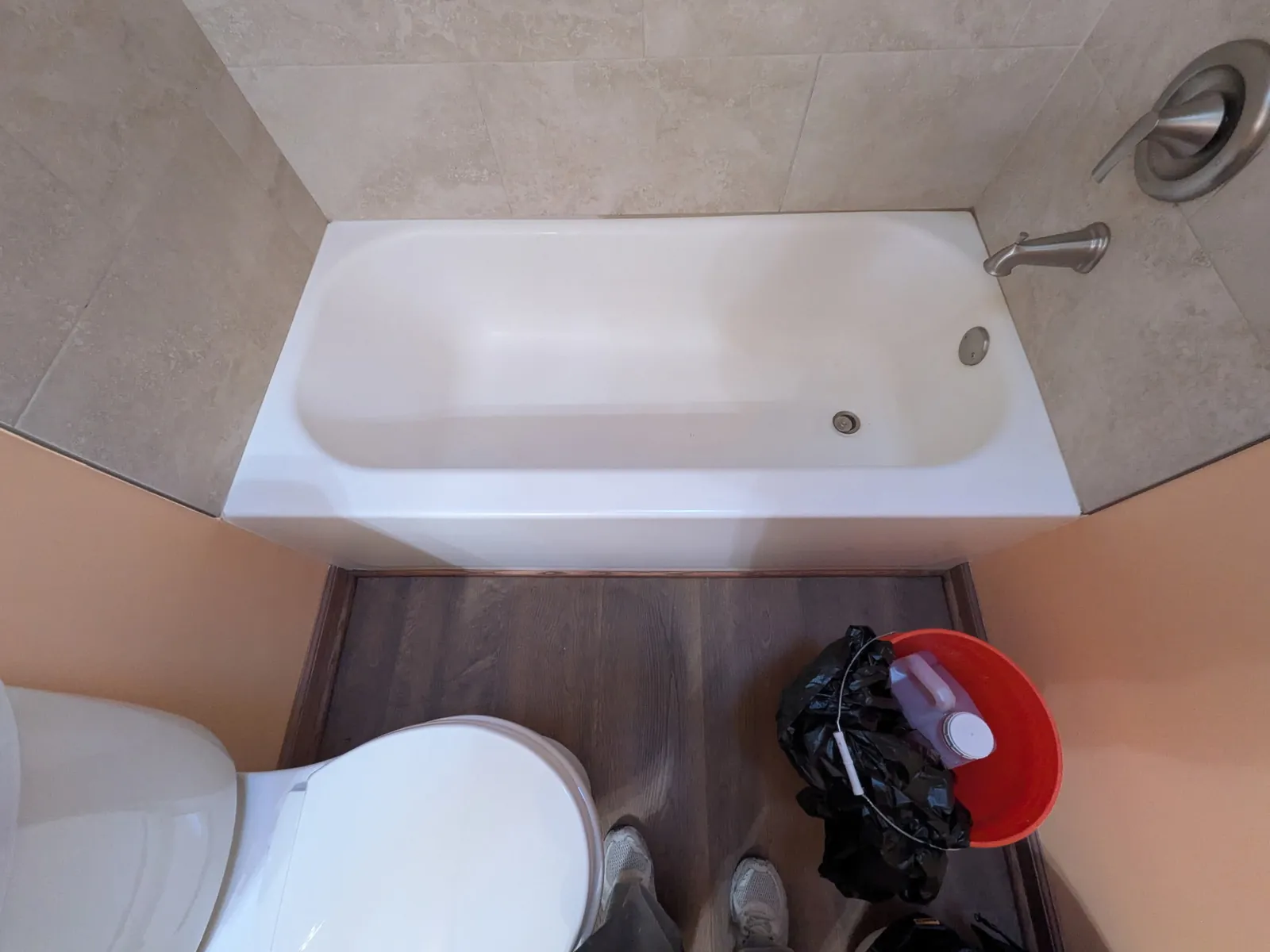
Before: earlier refinish
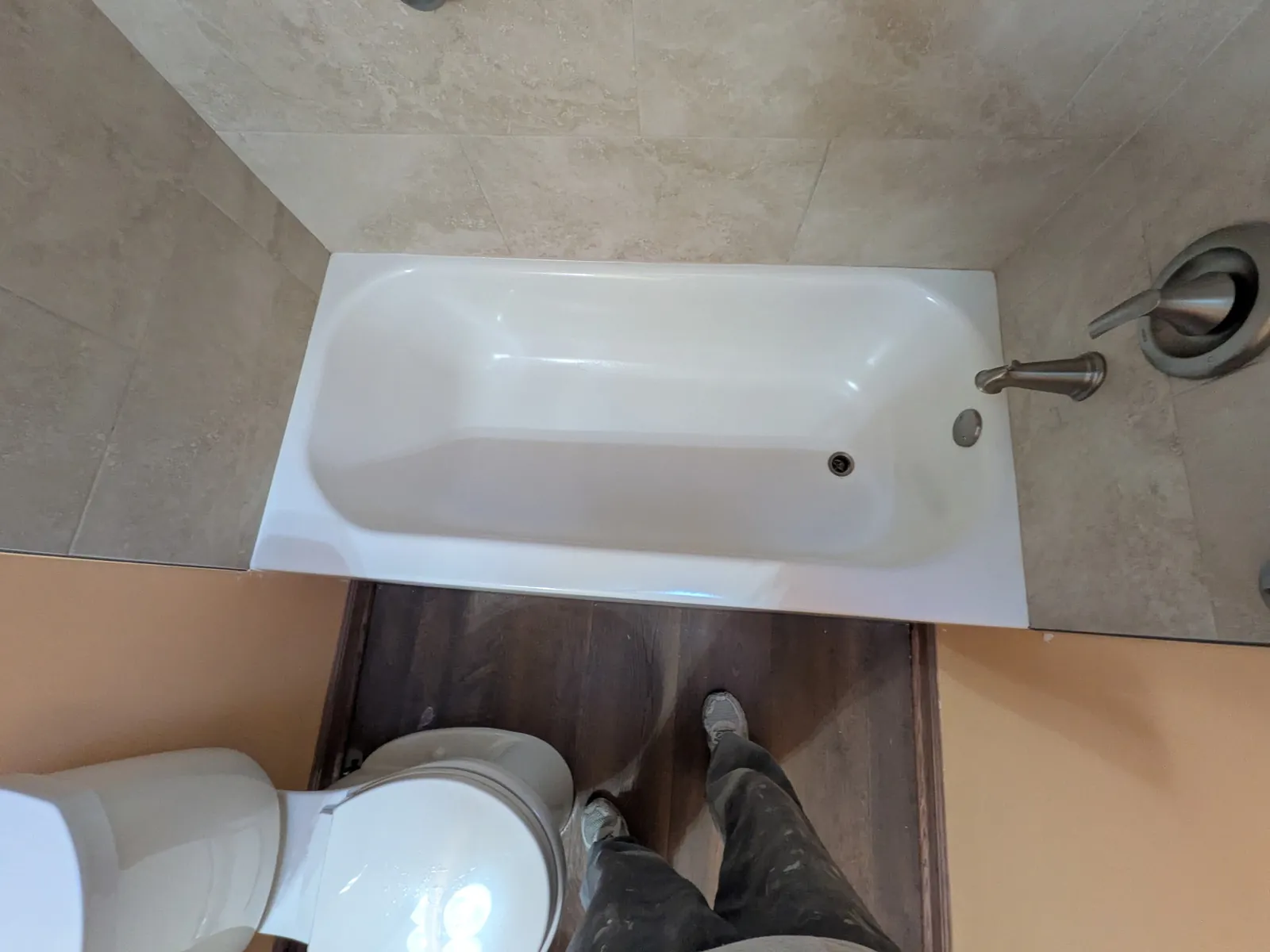
After: reglazed
Step 4
Repairs to eligible surface damage
Chips, small surface defects and some cosmetic damage can be repaired before the new finish goes on, so they do not show through. Whether a particular defect is repairable depends on its size, location and the fixture material.
Some customers only need a repair, not a full refinish. If your tub is otherwise in good shape, ask whether a targeted repair is an option. After a chip repair, follow your technician's guidance before using the tub.
Related services: bathtub repairs and refinishing, chip repair, crack repair and fiberglass tub repair.
 Before
 After
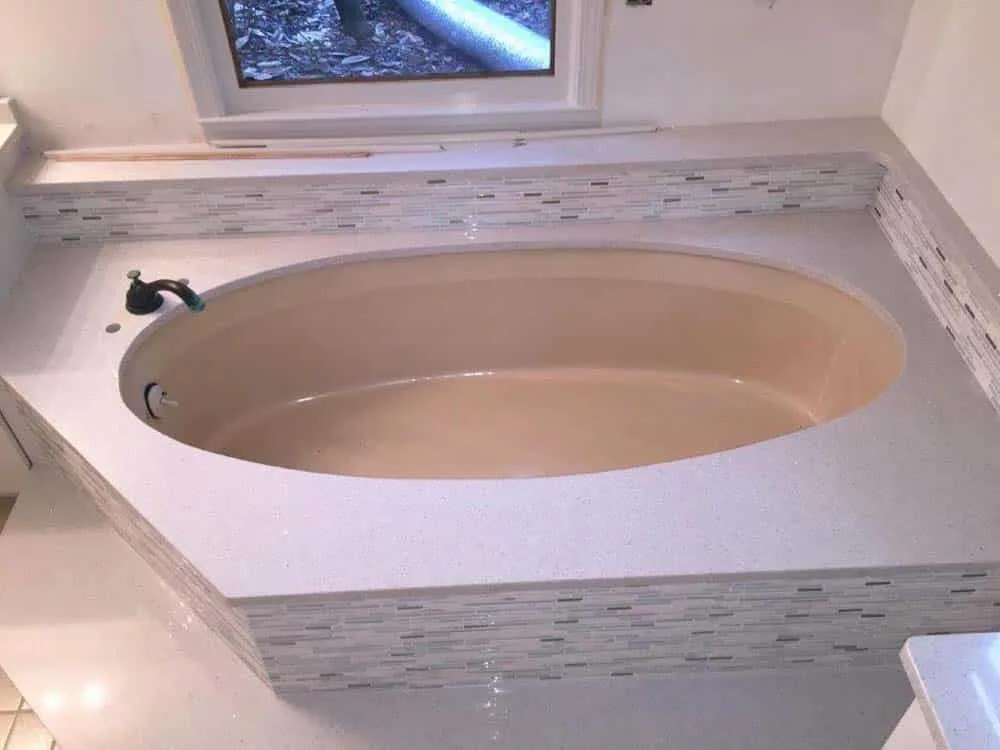 Before
 After
Step 5
Bonding agent and finish application
Once the surface is clean, repaired and masked, a strong bonding agent is applied, followed by a high-quality refinishing product. The room is ventilated during application.
Color-change refinishing is offered, so a dated pink, green or beige tub can be updated rather than replaced. The final appearance depends on the existing surface and the finish chosen.
Products and methods vary with the fixture material and condition, so we do not publish a single formula or step list here. Ask your technician if you have questions about your project.
Step 6
Drying, curing and inspection
A refinished surface needs time to dry and cure before it is used or cleaned. Cure and wait times depend on the coating system, temperature and humidity, so your technician will give you specific instructions for your fixture before you use it again.
The work is inspected before the job is complete. Using the tub too soon can damage a finish that has not fully cured.
Planning around bathroom downtime? Read the bathtub refinishing drying and cure time guide.
After the visit
Caring for your refinished tub
- Follow the care instructions your technician provides
- Use pH-neutral, non-abrasive cleaners
- Avoid abrasive powders, scouring pads, harsh acids and bleach
- Avoid suction-cup mats and accessories
- Rinse away soap residue and dry surfaces after use
- Fix drips and leaks promptly
More tips are in our bathtub maintenance guide. For traction, ask about slip-resistant tub bottoms.
Beyond the bathtub
Showers, tile, antique tubs and more
The same evaluation-first approach applies to tile and shower refinishing, antique tubs and sinks and tub cut-down conversions. Tile refinishing is not waterproofing, so loose tile or water intrusion must be addressed first.
Want to see finished work? Browse customer reviews and project results or the full portfolio.
New to refinishing? Start with the bathtub refinishing guide or explore all residential bathtub services.
Homeowner questions
Bathtub refinishing process FAQ
What does the bathtub refinishing process involve?
Unique Refinishers describes its professional reglazing process as beginning with deep cleaning and progressing through damage repairs, masking and ventilation, bonding-agent application, premium refinishing-product application, curing and inspection. The exact steps for your fixture depend on its material, condition and any earlier coatings.
How do I know whether my tub should be refinished or replaced?
Refinishing renews the surface of a fixture that stays in place. It is usually considered when the tub is structurally sound and the concerns are cosmetic. Cracks that flex, rust-through, leaks or a planned layout change point toward repair or replacement instead. An evaluation of the actual fixture is the only reliable way to decide.
Can chips and cracks be repaired before refinishing?
Eligible chips and some surface damage can be repaired as part of the process. Structural cracks or damage that allows the tub to move need a different solution. Learn more about chip repair and crack repair.
How long before I can use my bathtub again?
Cure and wait times depend on the coating system, temperature and humidity, so your technician will give you specific instructions for your fixture before you use it again. Our drying and cure time guide explains the factors involved.
Can I change the color of my tub?
Color-change refinishing is offered. Ask about the colors available for your fixture when you request an estimate, because the final appearance depends on the existing surface and the finish chosen.
Can fiberglass tubs and showers be refinished?
Many fiberglass fixtures can be repaired and refinished when the base is solid and not leaking. See our fiberglass tub repair page and the guide to refinishing fiberglass bathtubs.
How should I clean a refinished tub?
Follow the care instructions your technician provides. In general, use non-abrasive cleaners, avoid suction-cup bath mats and keep harsh chemicals off the finish. Our bathtub maintenance guide covers day-to-day care.
How long does a refinished bathtub last?
Results depend on the condition of the fixture, how it is used and how it is cleaned. An observed range of 10 to 15 years is sometimes cited, but that is an observed range, not a warranty. Read more in how long bathtub refinishing lasts.
Request a Residential Refinishing Estimate
Tell us about your tub, shower or tile and its condition. You can send a photo with your request.
Tell us about your project and we’ll review your request. Photos of the bathtub, shower, tile or sink can help us evaluate the work.
Prefer to talk? Call us directly:
Call 770-945-0072